Since the creation of cryptocurrency, the idea of Web3 has been gaining traction.
The idea is that Web3 promises a decentralized online world where users reign supreme, controlling their data and digital assets with full autonomy.
As the excitement builds, many are left wondering: how close is society to bringing this grand vision to reality?
While Web3 has made significant strides, challenges persist, leaving the industry at a crucial juncture.
Enter the concept of the “open web.” While related to Web3, the open web is distinct — potentially holding the key to a future where the internet is democratic. This article will explore the current state and future prospects of Web3 and the open web.
The Promise and Pitfalls of Web3
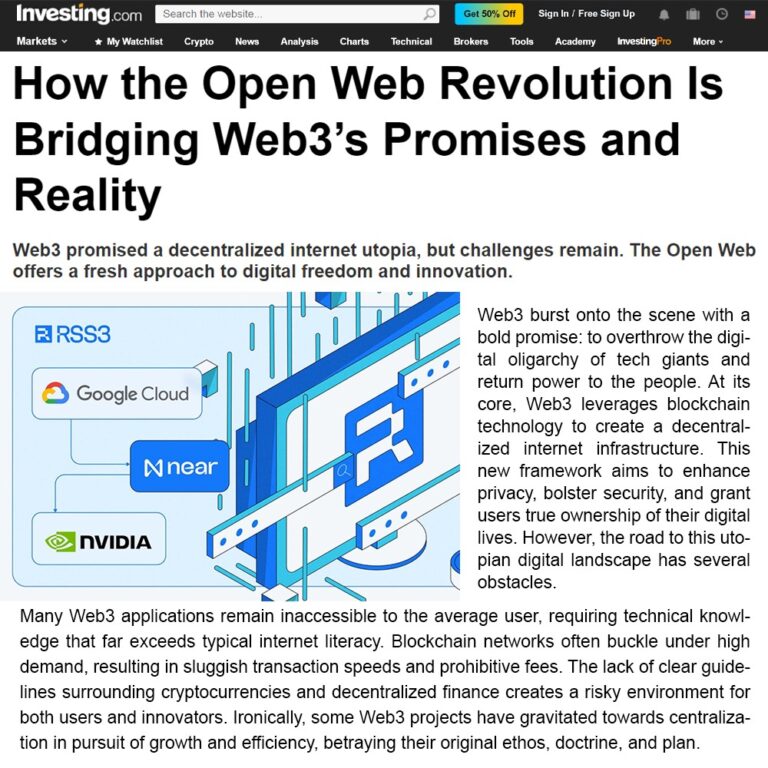
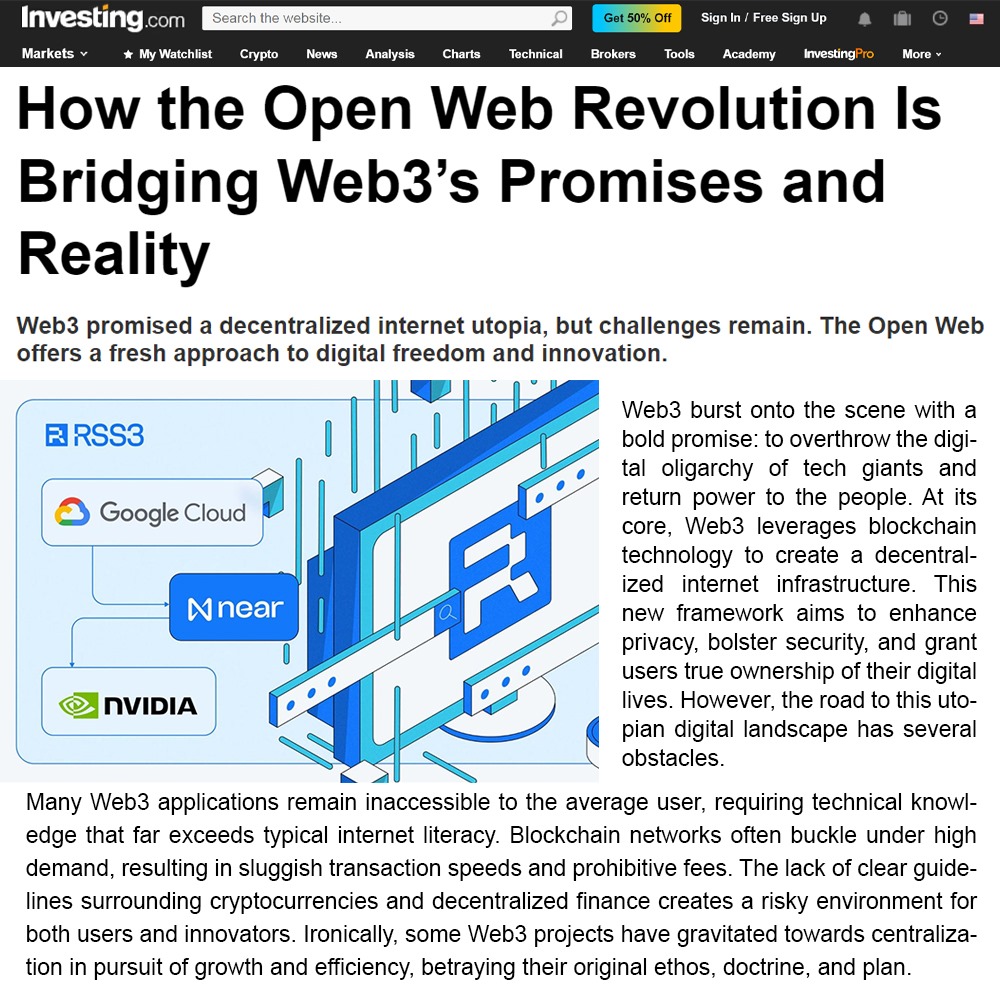
Web3 burst onto the scene with a bold promise: to overthrow the digital oligarchy of tech giants and return power to the people. At its core, Web3 leverages blockchain technology to create a decentralized internet infrastructure. This new framework aims to enhance privacy, bolster security, and grant users true ownership of their digital lives.
However, the road to this utopian digital landscape has several obstacles. Many Web3 applications remain inaccessible to the average user, requiring technical knowledge that far exceeds typical internet literacy. Blockchain networks often buckle under high demand, resulting in sluggish transaction speeds and prohibitive fees.
The lack of clear guidelines surrounding cryptocurrencies and decentralized finance creates a risky environment for both users and innovators. Ironically, some Web3 projects have gravitated towards centralization in pursuit of growth and efficiency, betraying their original ethos, doctrine, and plan.
These challenges have led many to question whether Web3 can truly deliver on its lofty ambitions. While progress continues, the gap between vision and reality is still large.
Why the Open Web Is a Bridge to the Future
As Web3 grapples with its growing pains, a parallel movement has been gaining momentum: the open web. This concept shares many of Web3’s ideals but approaches them from a different angle. Rather than focusing solely on blockchain technology, the open web emphasizes creating open standards and protocols that foster interoperability and the free flow of information.